A Beautiful Melancholy

I recently read an article where a gardener described the shift from summer to autumn as a beautiful melancholy, and it really resonated with me. It perfectly described the sadness of nature's inescapable decay and decline through autumn towards winter, whilst at the same time heralding a season of exquisite beauty and bounty.  

Perhaps there's a certain wistfulness as the light fades, the days shorten and the warmth cools. We say goodbye to the carefree feeling that long, warm summer days seem to bring as we prepare to spend more time inside, marking the passage of time as another year begins to slip by. There is a sorrow as signs of slow, gradual, yet inevitable decay unfold around us. Trees begin to lose their rich green canopies, flowers fade, birds escape to warmer climes, crops are harvested, fields are laid bare, birdsong is heard less and less. There is an awareness that the world is slowing down, pausing; gearing up for the harshness of winter's hibernation. The loss of light and warmth will be greatly missed.

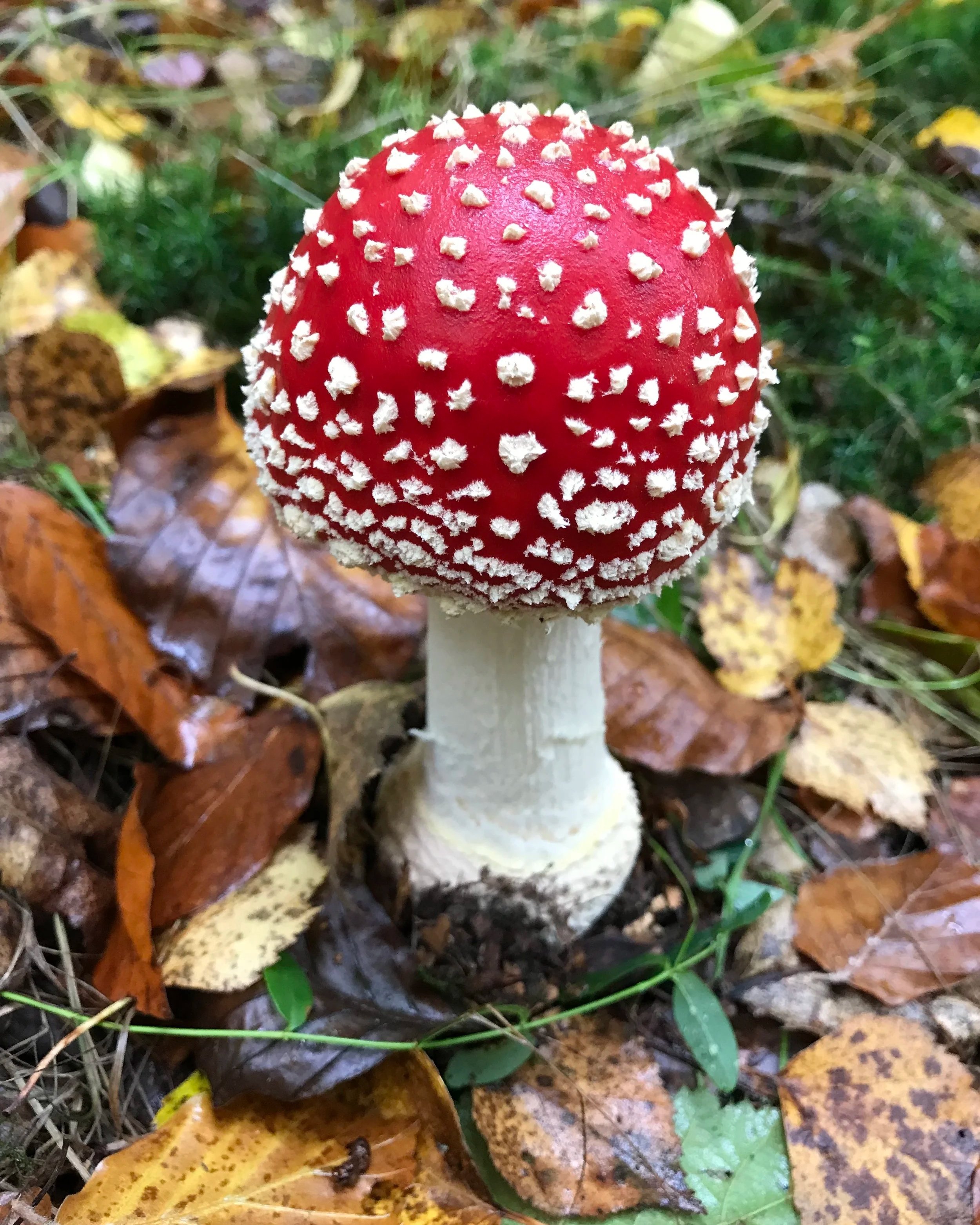
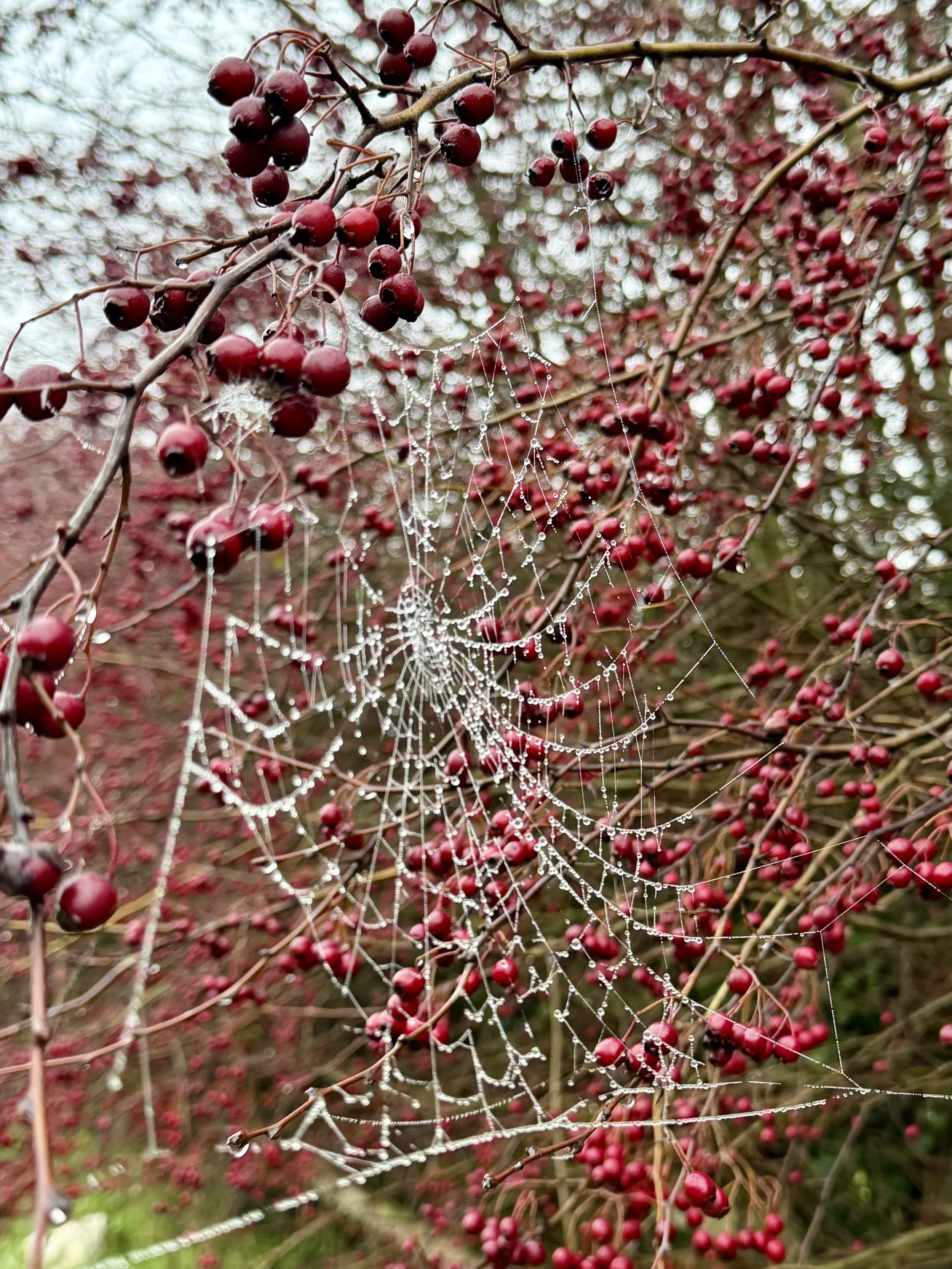
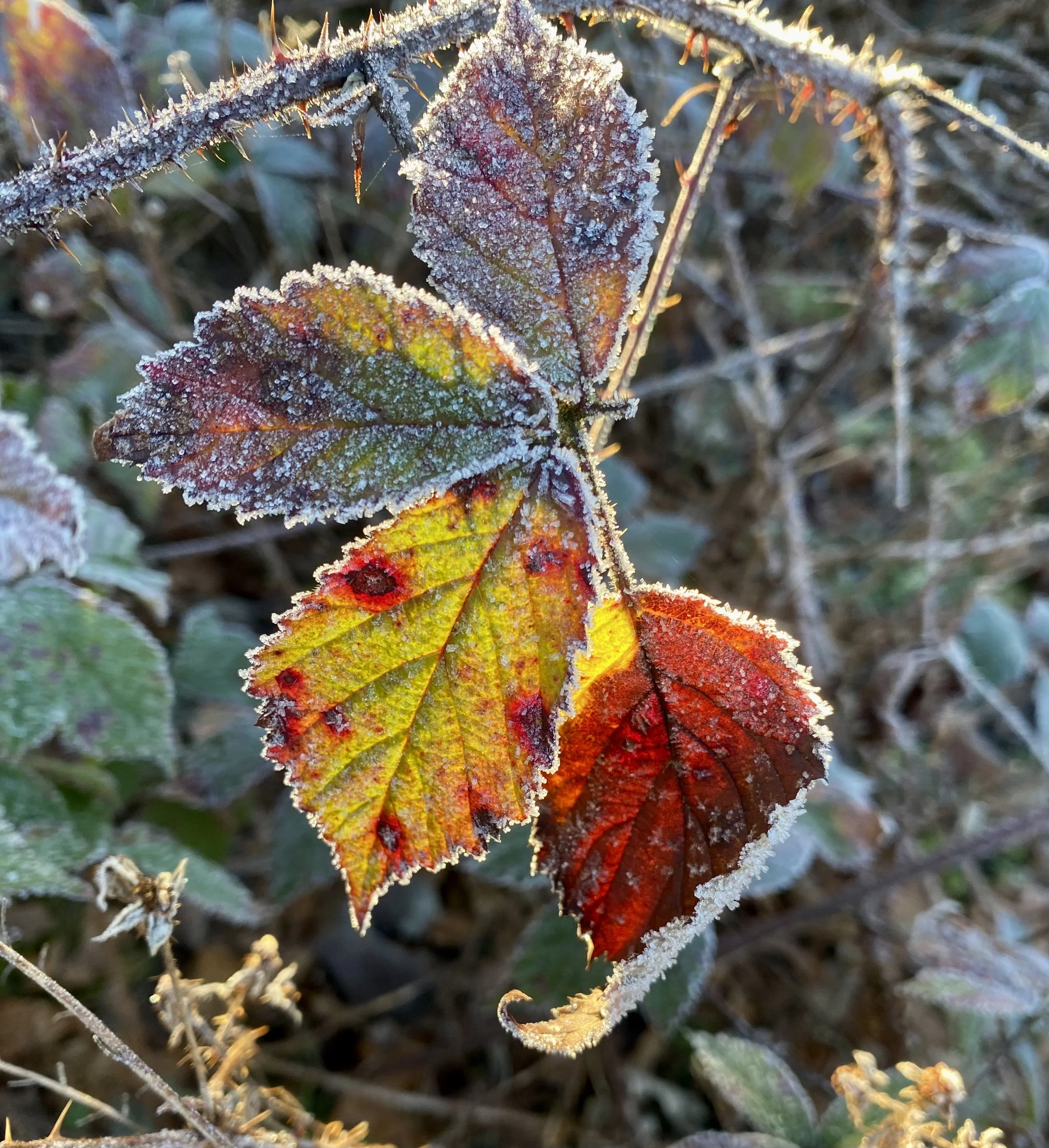
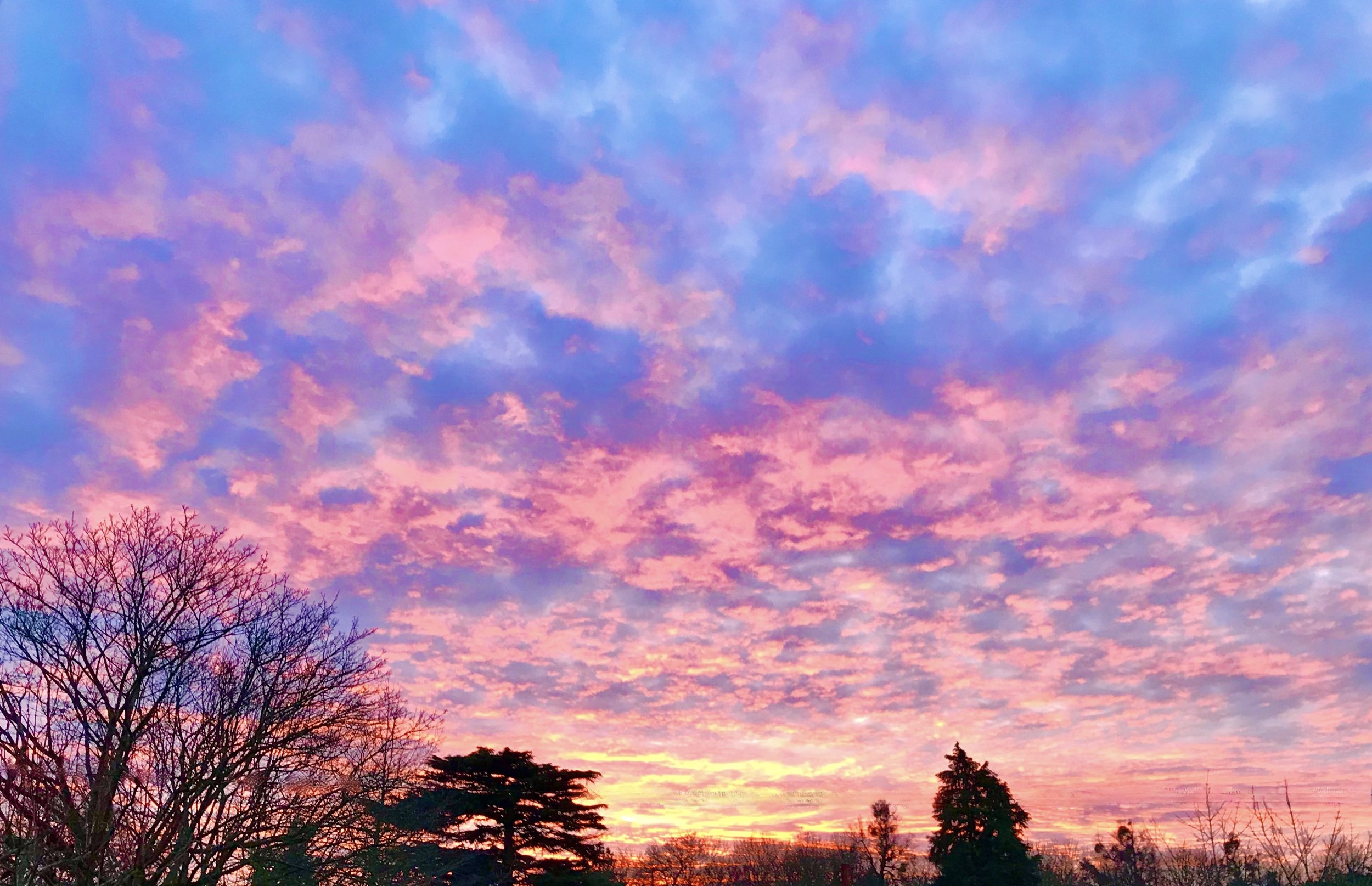
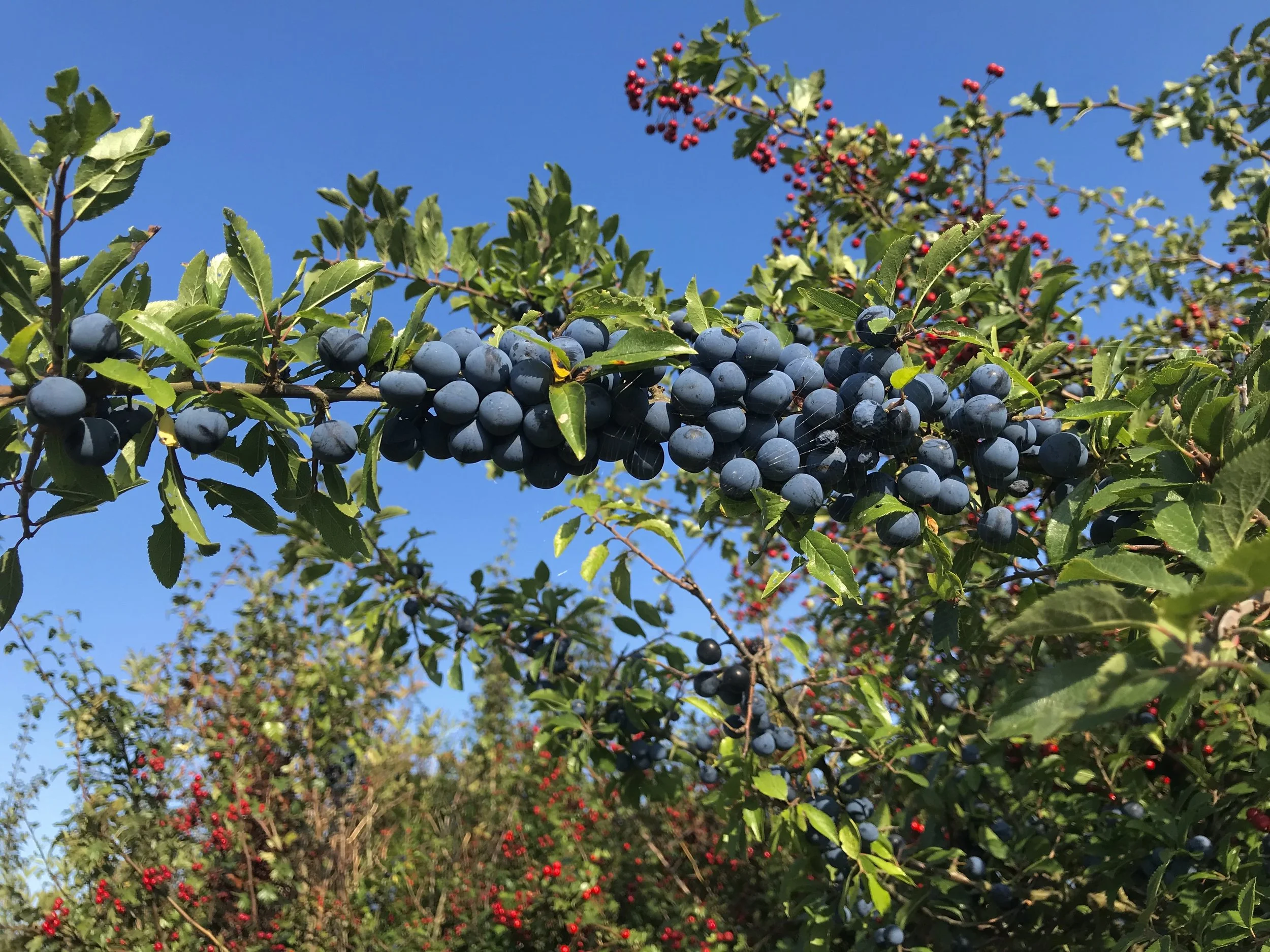
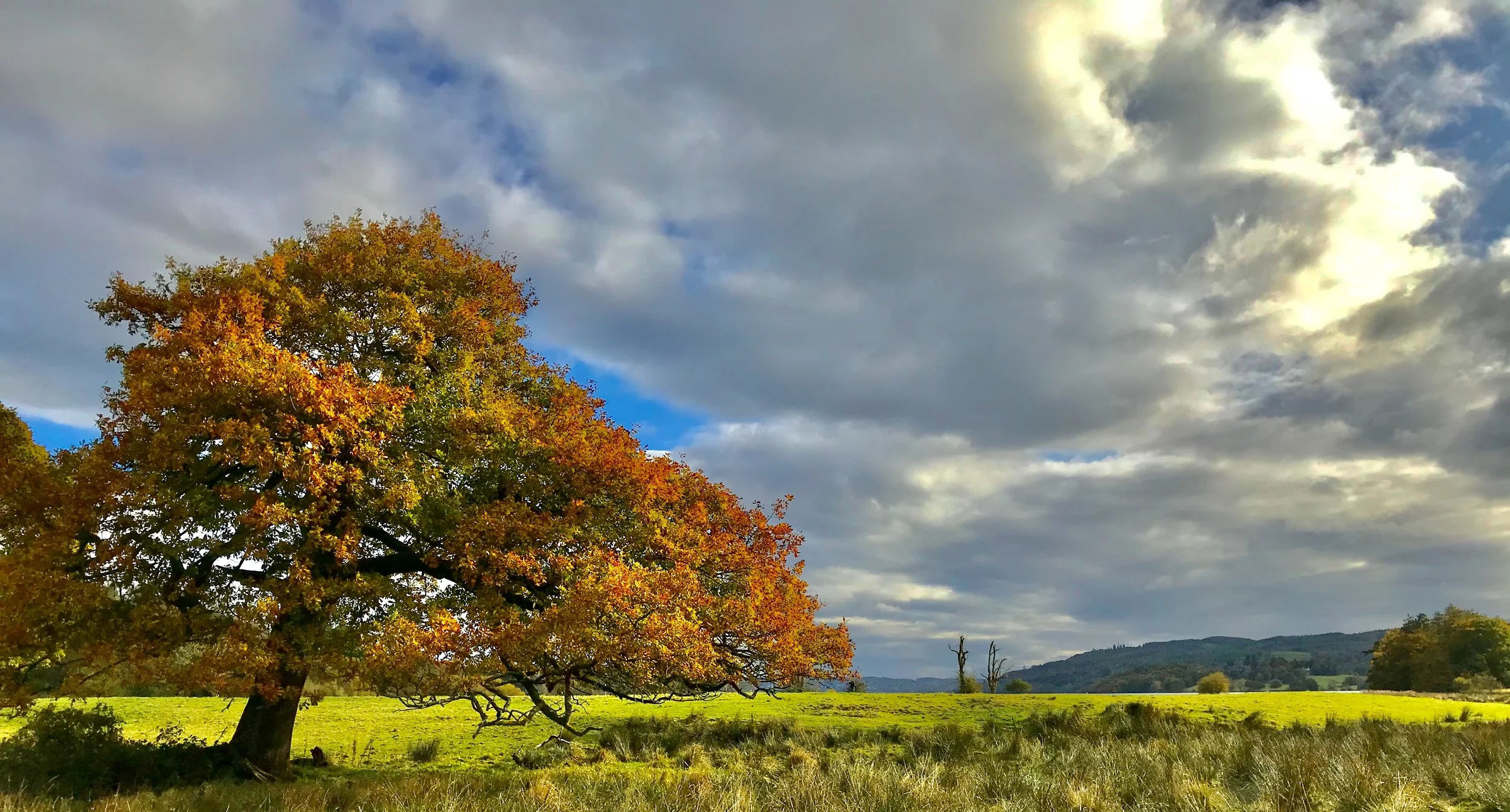
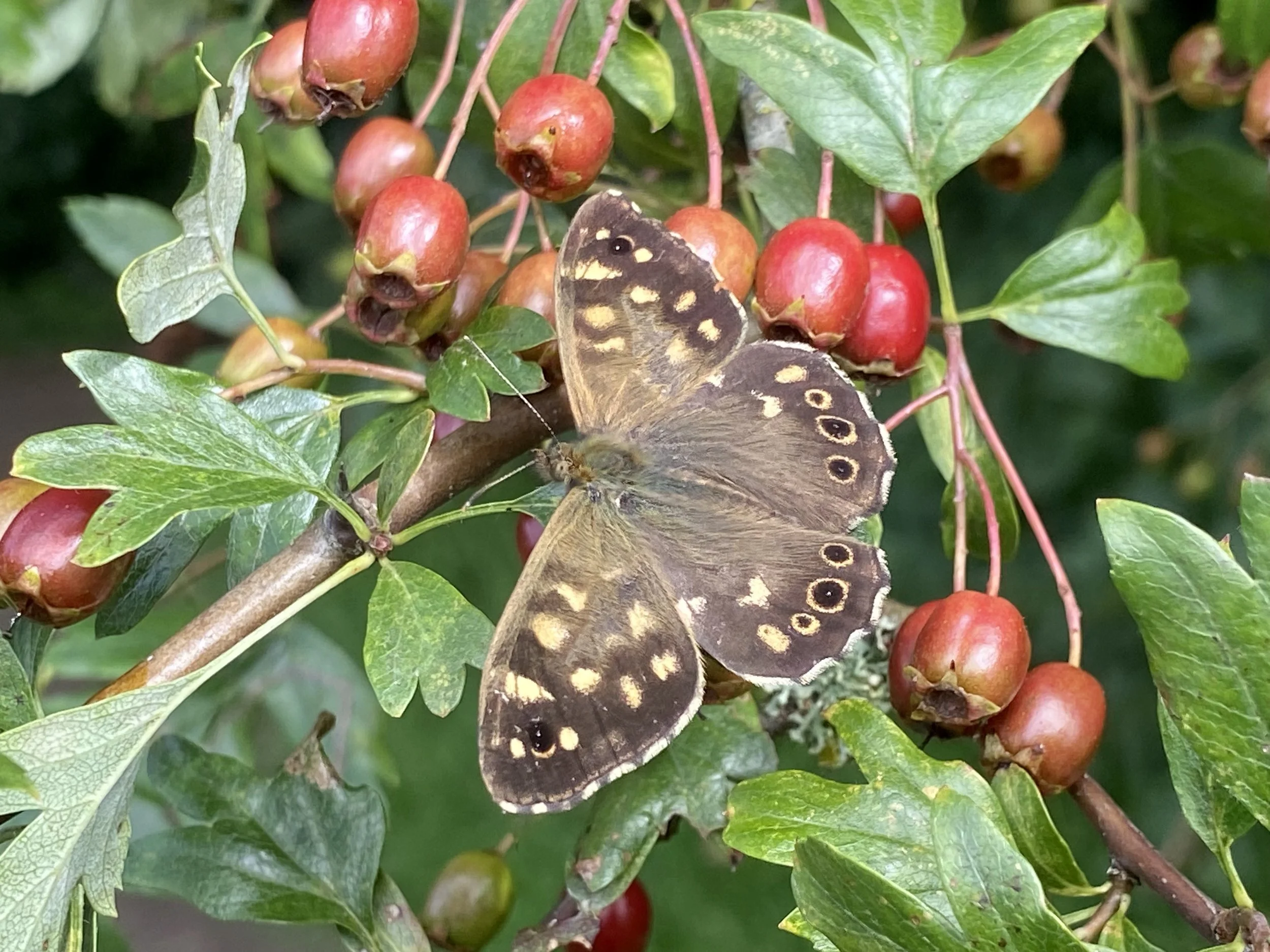
But in amongst this slow decline, the exquisite appears. Trees now wear their autumn finery in shades of gold and rust and copper. Early afternoon light mellows, becoming softer and more burnished, the sinking sun casts long shadows and mists linger in cooling woodlands. Sunsets turn towards their winter palette of violet and lilac and cooler weather makes early morning walks invigorating and energising. Mushrooms and toadstools bring a welcome splash of colour to damp undergrowth and berries of all colours burst from thick hedgerows; fat, juicy blackberries, clusters of dark purple-black elderberries, soft smokey blue sloes, orange-red hawthorn berries, shiny scarlet rosehips, the holly, rowan, firethorn and many more. Trees produce their nuts and seeds, each one a small work of art; the acorn in its made to measure cup, the smooth perfection of a conker, the sweet chestnut in its spiky lime green case, the beautiful sycamore seeds gently spinning as they fall. We look forward to a season of cosy evenings, lit fires, warm sweaters, hearty meals and crisp, clear frosty mornings.

While it can be a plaintive time, it is also a period of thankfulness and appreciation of nature's bounty and beauty. I am grateful for cooler temperatures, enjoying fresh walks on the hills with a cold wind bringing colour to my cheeks and blowing away the cobwebs. It is truly a time to embrace and be joyful, not melancholy. 

A Walk on the Quiet Side

If you're anything like us, you may find that as the years go by you begin to crave a little more solitude, peace and quiet. After decades of haring madly around the globe, determined to see and do as much as possible, we've discovered the pleasure of slowing down a little. Those years of travelling were wonderful, but these days we try to take our travels, life in general, and our hillwalking at a slightly more relaxed pace.

Having completed our Wainwright and Outlying Fells challenges, we feel we can now be a little more mindful in choosing our walks. We select routes that suit how we're feeling and what we want to get out of the day. Sometimes it's the pleasure of walking and chatting with friends or family; sometimes it's the luxury of a summit and its views to ourselves. Other days might be about exploring new or more remote areas, or it could be simply wanting to switch off and immerse ourselves in our surroundings.

Much as we love fell walking and climbing, there are, and have been, times when we didn't always want to spend six or seven hours tackling strenuous routes in the high hills. Occasionally shorter, quieter routes were preferable with less effort, fewer people and less distance, whilst still enjoying breathtaking views. 

Here are five quieter fells where we've found exactly that.

School Knott

This lovely fell lies almost exactly to the east of Bowness and Lake Windermere's eastern shore and parking is in a small layby just at the junction of Cleabarrow Lane and Crook Road, opposite Windermere Golf Club. The route is well signed and the first part of the walk is through the pretty hamlet of Cleabarrow on the Dales Way. There are two gates to negotiate before you pass Scout Tarn on your left. It's all very easy and very pleasant. Leaving the Dales Way, branch off to the right where the there is an obvious path up. It is a little steeper, but it's gentle and on grass, with plenty of places to admire those emerging views of Windermere. Head up towards a very photogenic lone Oak Tree and follow the path the runs to the left of it, up to the obvious summit ahead. If you choose, you can drop down and tack on Grandsire which affords wonderful views of the Howgill Fells and distant Pennines, or even drop down to explore the shores of pretty School Knott Tarn. 

Irton Pike

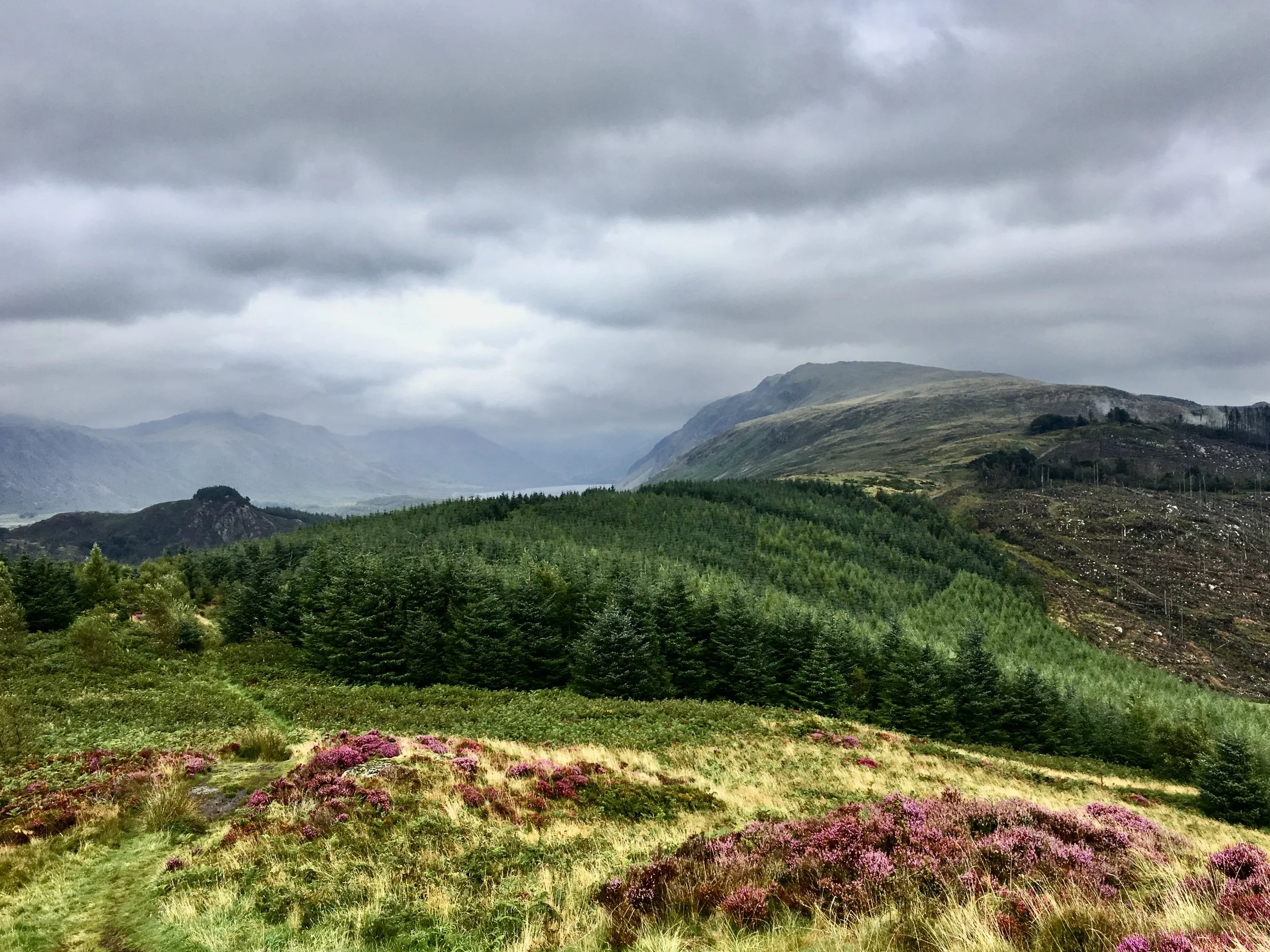
This fell sits at the entrance to Wasdale and is a lovely, quiet place to walk. There is a small parking area on the Santon Bridge to Eskdale Green road and you can nip out of the side of the car park to join a stoney track which would eventually lead to Wasdale. You will be able to spot Irton Pike to your left through the trees, and Green Crag to the right as you climb higher. After about a third of a mile, there is a path that branches off to the left and winds through very pretty pine trees. If you carried on on the original track, a gate would lead out onto open fellside with the bulk of Whin Rigg ahead of you. Our path is lovely and for the most part flat, with a very gentle climb up to the summit at the end. The views are expansive in all directions, and for a walk of only about a mile, the rewards certainly outweigh the effort.

Latterbarrow

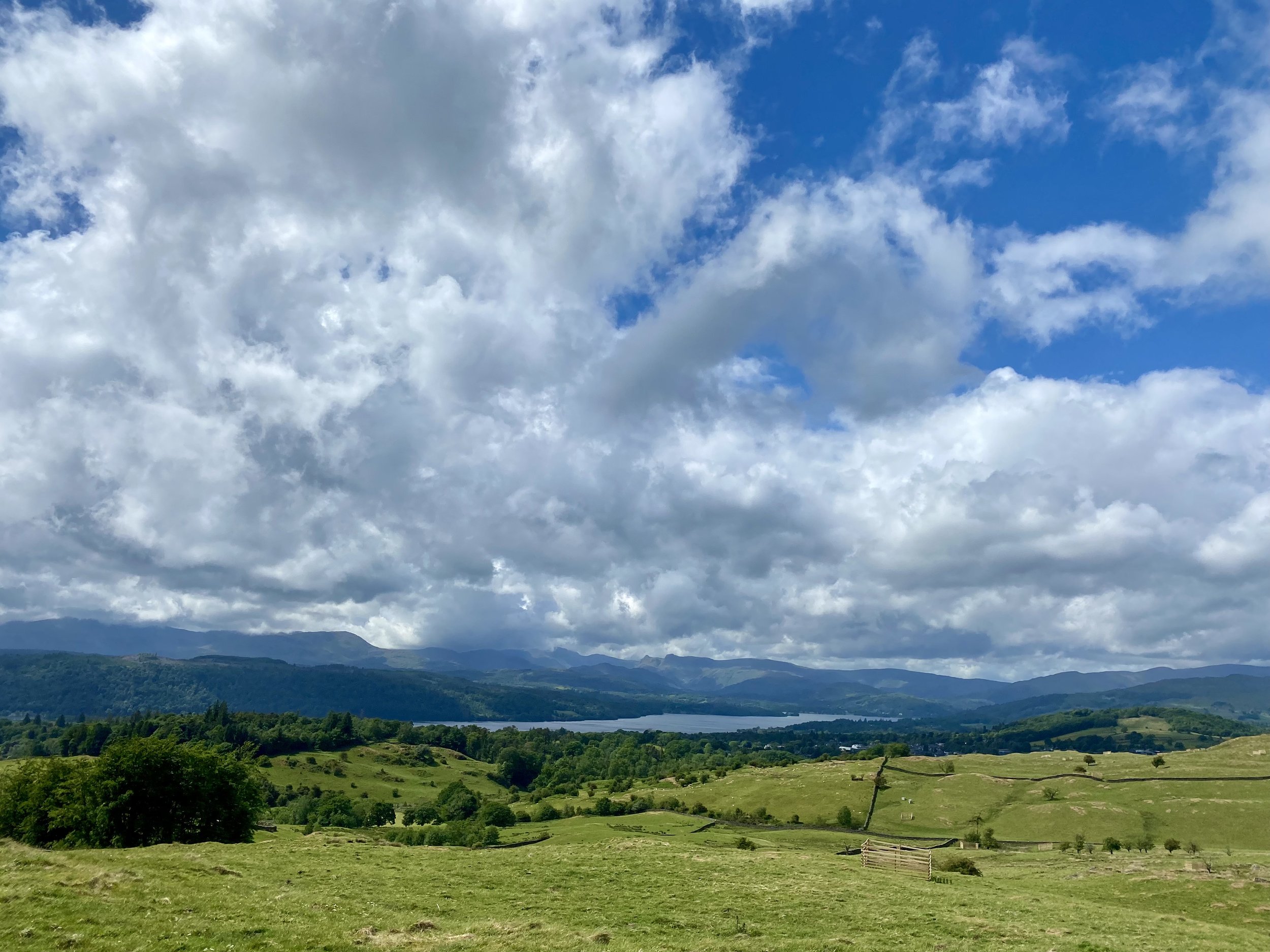
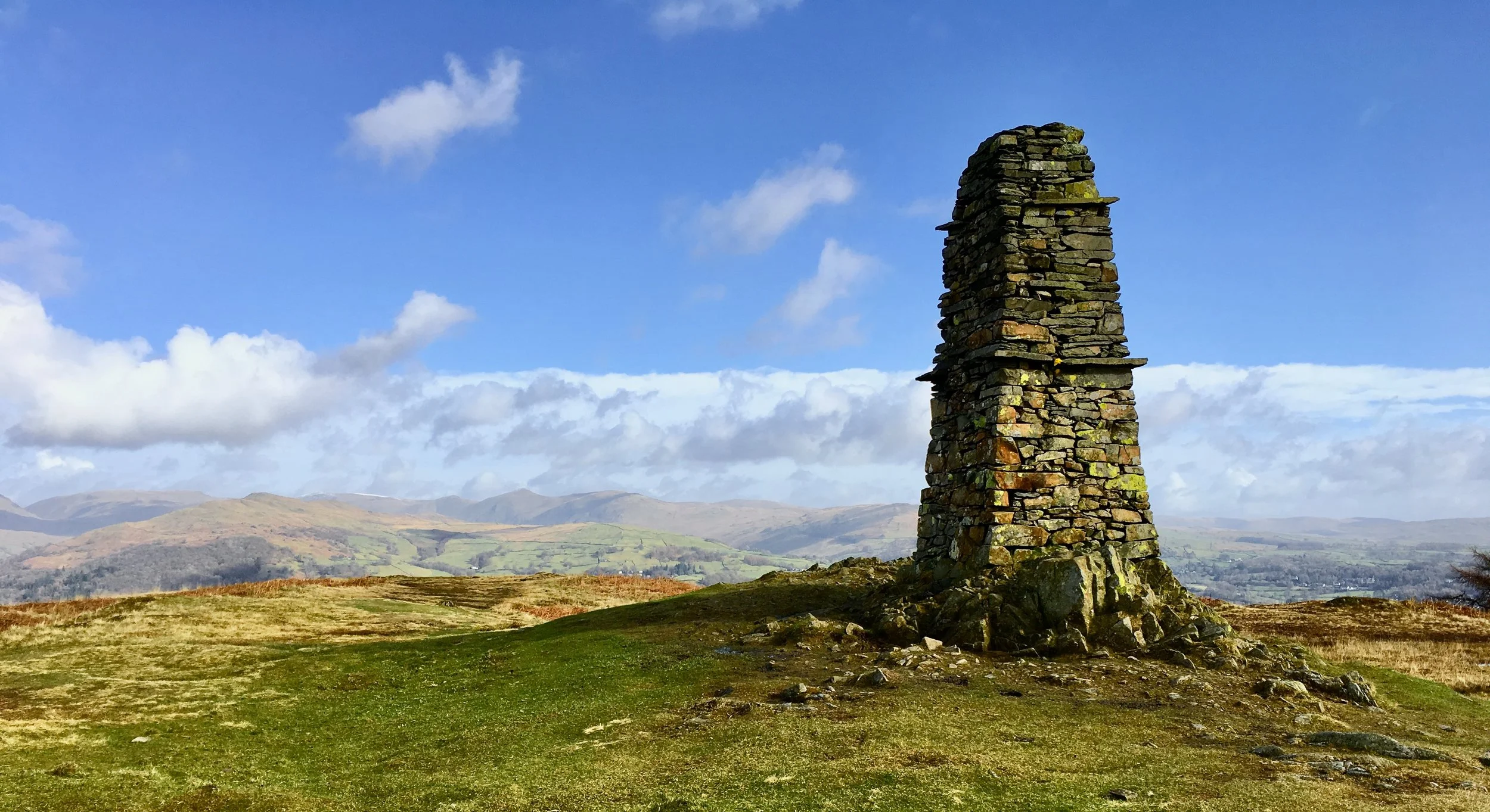
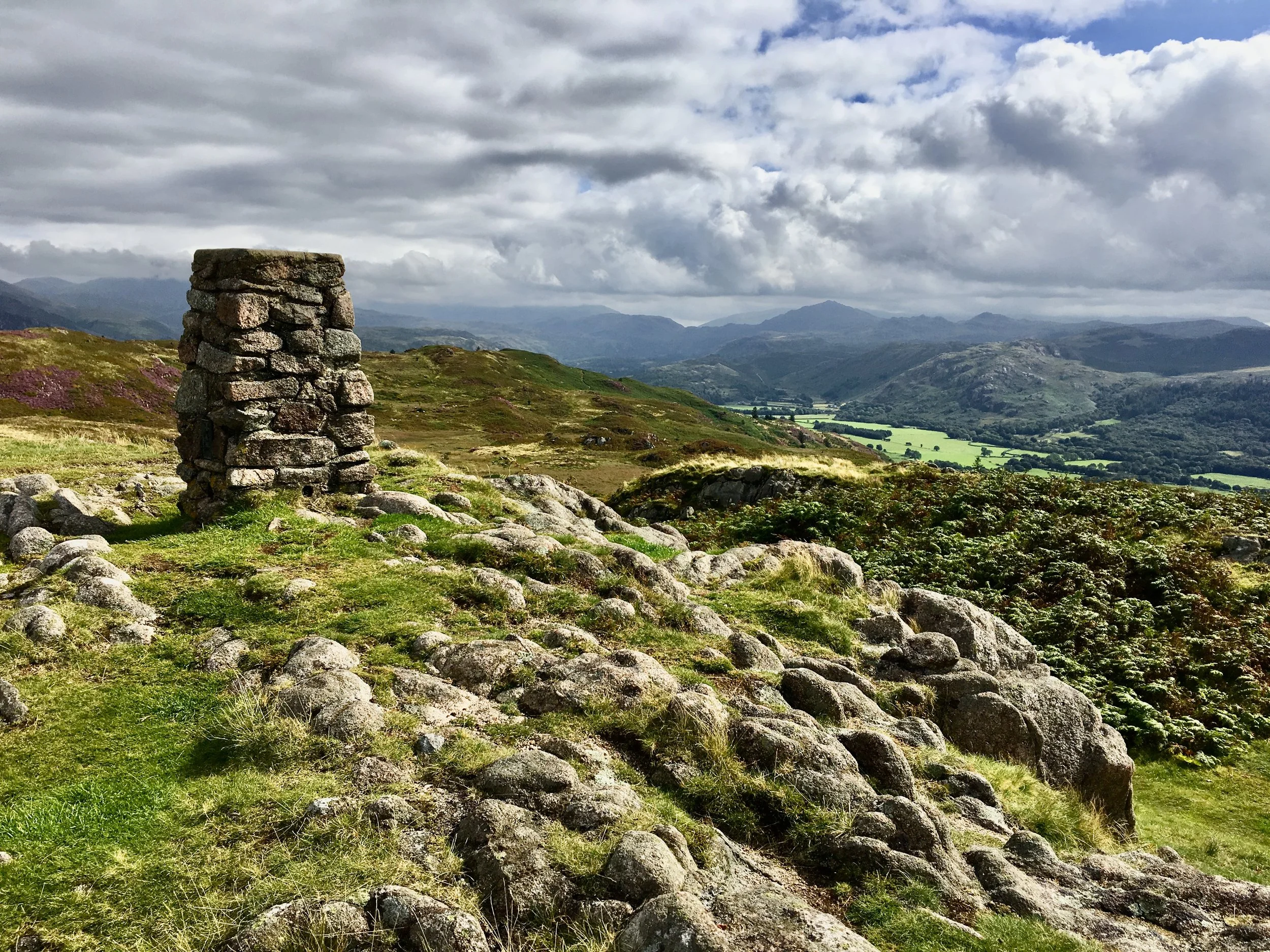
This gorgeous fell sits high above the western shore of Windermere, looking out over the lake to the east and Hawkshead to the west. We climbed it from Wray Castle as we found parking in Hawkshead was a little tricky and I think this route made the walk really interesting. From the back of the castle car park, follow the path and signs to Windermere Lake shore. You will pass a very picturesque boat house before reaching a gate and taking a path to the left. You will then go through a gate to your right following an obvious path up through the fields. Go over a stone stile at the top, follow the path to the right and out onto a narrow road. Carry on until you see a left turn and a National Trust sign that says Basecamp. Fork right after a few hundred metres and go through (or round the side) of a gate onto Forestry Commission land. Follow the lane, then take a signposted path to the right into the woods. The path climbs and winds up through the trees before emerging onto rougher ground, just below the summit. Follow the obvious path up to the truly enormous summit cairn. The views are absolutely breathtaking, especially of Windermere and the fells encircling Ambleside. 

Muncaster Fell

This is a wonderful walk with equally wonderful views. Parking is in the Muncaster Castle car park, taking Fell Lane which leads directly out of it to your left. The lane climbs gently with lovely views of Ravenglass behind you. After about half a mile, the path descends as you near pretty Muncaster Tarn, then divides. Take the right hand branch with its sign to the summit, as the left hand path leads to the tarn which is on private land. You will be able to glimpse it through the trees as you pass. Go through a five bar gate onto open fellside where the views really open up. Follow a path that edges a forest on slightly rougher ground, with the summit of Hooker Crag up ahead. This is the highest point of Muncaster Fell. There is a slightly steeper climb, although all on grass, to the summit cairn, but it is fairly straightforward. The views in all directions to the high fells of Lakeland are stunning. You could continue on to the curious stone table called Ross's Camp before heading back the same way.

Cunswick Scar


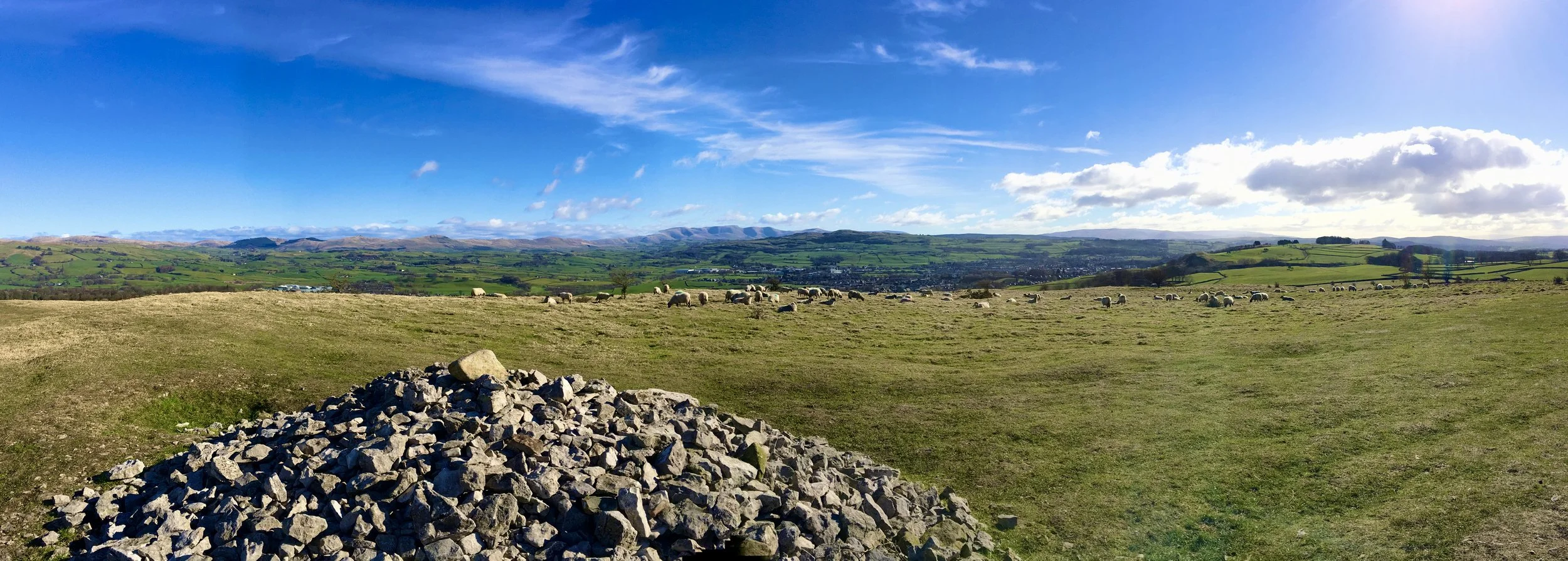
This is a lovely walk to do on a blustery, sunny day. There is a small parking area on the Kendal - Underbarrow Road where the Bradleyfield Radio Mast towers over the trees just behind the car park. Take the obvious lane which leads into Cunswick Woods  and keep going to a gate and a sign for Cunswick Fell. Walk across a couple of fields; there isn't really a defined path, but you can head towards a drystone wall where there is a agate and another sign. Through that, and this is all flat walking, you cross another field on a slightly less obvious path which will then start to descend to a gate. Through that, and it is very pleasant walking on a gently undulating path past a couple of cairns, before reaching the larger summit cairn which sits in the middle of the path. The views are wonderful from the Scafells to the Shap Fells and over Kendal.

Day One, or One Day?


The Oxford English Dictionary defines a challenge as ‘a difficult or demanding task that tests someone’s abilities’. That sounds a little daunting when you see it in black and white, but it doesn’t have to be that way.  

I would encourage anyone to set themselves a challenge, however big or small, serious or fun, long or short term, at home or outdoors and try to keep it going, as there are so many physical and mental benefits. Pushing yourself a little longer, harder or faster physically will not only boost your fitness, but will help to build confidence, determination and stamina. It could break you out of a routine, make you feel more positive, less stressed or anxious and more energised. It could give you a sense of purpose, provide you with new skills, greater productivity, increased creativity or simply give you feelings of achievement and satisfaction. The biggest hurdle is starting. 

It needn’t be running the London Marathon, it could just be walking the dog a little further each day or taking the stairs every time. Staying fit, healthy, active and stimulated has huge mental and physical benefits for all of us. I particularly find that my sleep, my digestion and my energy levels are better and I feel relaxed, more positive and clear headed after my exercise each day. It could be equally as satisfying to try and teach yourself to knit, play a musical instrument, read that book you always meant to, follow a complicated recipe or visit an exhibition. 

So that’s the rationale, now I’d better put my money where my mouth is!

Having previously written about not setting ourselves any more official challenges after the Wainwrights, we now seem to have adopted quite a few loose challenges! We didn't set out in January with a neatly typed list that was all ready to be put into practice. It all really began as an idea to increase our daily walks to a minimum of three miles or longer, which was part of a bigger focus on health and wellbeing this year as we get older, just to help us maintain fitness levels.  

I think doing it this way meant everything listed below has evolved organically over several conversations, ideas and a lot of ' why don't we do this?' or 'we could do that' while we were looking at routes and planning our year. It took any pressure off setting resolutions or over-ambitious goals, both of which, I think, are the quickest ways to bring on demotivation and a lack of enthusiasm. As a case in point, we saw the same two people out running near our home during the first two weeks of January; after that, we never saw them again....

  • Over the last few years, we’ve recorded every single walk we did, however short, but this year we are focusing on quality rather than quantity. We decided that every walk we did would not be less than three miles and so far, we have stuck to that religiously. It's certainly made a difference to our pace and stamina. On the odd days we don't walk, we go out on our mountain bikes, or use the static bike at home.

  • The loose/not loose idea to climb all 95 Ethels in the Peak District has now taken hold. Named after Ethel Haythornthwaite who was behind the creation of the Peak District National Park, they encompass all the peaks over 400m and other significantly prominent hills. We've been visiting the Peak District each year for a few years now, and have climbed 25% so far, which equates to 24 peaks. This March, we stayed in Buxton and climbed 13 Ethels in the vicinity, with one slightly longer trip to Stanage Edge to climb two there (that was really an excuse to re-visit somewhere we love being!). It was a great week of walking.

  • We'd like to get to 400 UK mountains climbed by perhaps the first quarter of next year. We've done around 360 at the moment, so we don't think it’s too unrealistic. 

  • We're loosely undertaking the Berkshire Trig Point challenge. I bought Bro the book for Christmas and we plan to work our way through it, albeit very slowly, and with no time limit. It’ll be a chance to get to know our local area in more depth.

  • Bro set himself a cycling challenge on his static bike to climb the height of Everest, and is currently about 30 feet off completing it.

  • We climbed three more county tops during our recent Peak District trip; those being Derbyshire, Staffordshire and Cheshire. This means we've now done 12 in England (out of 120) and 14 in the UK (out of 174), so I think this will probably be the slowest burning challenge of all!

When you write it all down it looks a lot, but it's all achievable over differing periods of time. We are people who who work best with a little structure. We do loosely plan our time away, both here and abroad, with a rough idea of what we want to see, or what we want to climb or where we might like to walk. We find we're much better and more motivated heading out with a purpose and a goal. We also like the feeling of achievement, knowing what it is we want to do and then doing it, and this way we maximise precious time and don't miss seeing or visiting things or places we want to when we're abroad, or don't waste time deciding where to walk in this country. We also always head out very early to maximise the day.

But we're not trying to get all of it done this year and if we don't do some of it, then so be it. It's just about keeping motivated, keeping active and keeping fit. Enjoying it is the main thing and hopefully means we’ll be more motivated to continue. 

This article has focused more on physical challenges, but that isn’t to say we haven’t set ourselves other challenges that don’t even involve being outside; it’s all about balance for us.

The NHS advocates adults aged between 19 - 64 doing some form of daily exercise, and recommends 150 minutes of moderate intensity or 75 minutes of vigorous intensity spread over a week. So don’t say one day, say this will be day one!

 

A New Year microadventure

What is a microadventure? Coined by adventurer Alastair Humphreys, it’s a mini adventure in the outdoors that’s simple, cheap - or cost free - and close to home. Getting closer to nature, getting fresh air, just getting outside; it doesn’t matter what it is or what you do, as long as you find it fun, invigorating, stimulating, interesting, beneficial or enriching.

After, or during, the Christmas break when we’re all mostly indoors in centrally heated homes with, as this winter in particular it seems, flu and colds being prevalent, we enjoyed a lovely microadventure.

We love going out in different weather conditions. Fog, ice, snow, wind and yes, even rain, so when we looked out on 2nd January and saw a smattering of snow in the garden, we headed out early. I’d noticed from photos that we’d done the same walk - entirely by chance - on 2nd January for the last three years, so we decided to keep the tradition going. It was a little further from home in amongst the wide chalkland landscapes of Oxfordshire, criss-crossed by the Icknield Way, the Swans Way and the Ridgeway. We’ve walked in this area many times in all seasons and love the big skies and the palpable feeling of antiquity that there seems to be around these ancient trails.

However, as we drove further from home, the snow became thicker and we decided to change our plans slightly as the roads were becoming a little icy in places. We thought we’d park a mile or two closer, then walk a little further to our intended starting point, so we headed carefully down an icy lane to a layby we knew on the edge of a large wood.

When we got out of the car, we were staggered by the beauty around us.

Situated on fairly high ground, the walk through the mixed woodland was utterly and mesmerisingly beautiful. A low, rising sun cast a pale golden glow through the trees, all of which were dusted white. Pine trees looked stunning and a small woodland of silver birch seemed utterly ethereal, out of the sun and shrouded in a cool, icy blue mist. It was the most magical woodland we’d ever been in. Coming out of the trees, fields as far as the eye could see were painted white, with the sun casting long shadows. We walked through a shady valley, then turned and climbed steeply up onto the plateau above. It was both bracing and beautiful, with some warmth in the now risen sun. We followed tracks and paths, some familiar, some new, found quiet little woodlands, tiny churches and flocks of hungry sheep; their breath hanging in the cold air. We stopped half way to brew coffee on an old fallen oak, revelling in the warmth of a hot drink and the meagre warmth of the sun, whilst huddling against a cold but intermittent breeze.

We spent no money, we only drove six miles from home, we seemingly found the only pocket of substantial snow in the area due entirely to a change of plan and, although we’d walked parts of the route before, the snow and beautiful golden sun made it such a different and magical experience. It was a wonderful little adventure and a truly memorable way to start the new year.